Home Delivery

Free Shipping

Click & Collect
Narrow By
Office furniture includes three purchases that must operate together: a desk, a chair for long hours, and storage to keep the surface clear. Most home workspaces are in rooms that already serve another purpose, so all three pieces must earn their place. Homebox groups them here, so you can choose them together rather than individually.
Discover Office Furniture at Homebox KSA
The range combines workstations, chairs, and office storage in one place, so you can plan a corner as a complete solution. Desk designs range from modest study tops for bedrooms to larger shapes for a workspace. Seating is designed for hours, not minutes, and adjusts accordingly: an adjustable office chair in the range measures 62x50x84-94 cm, with the final pair of figures representing the frame's rise and fall.
Most people overlook storage while creating a plan. A 6-tier multipurpose unit mixes both, with acrylic panel doors and two drawers, while a display design leans more towards closed storage. In a tiny room, height matters most, as a tall, narrow unit may hold as much as a wide, low one while taking up far less floor space.
Shop Office Furniture Online in Riyadh, Jeddah
Begin with the wall you can spare and work outwards from there. Office desks set the footprint and determine which portion of the room is in use, office chairs shape how the corner feels by the third hour, and office bookcases store what the surface cannot handle. Shopping online allows you to arrange the three side by side and compare finishes and sizes in one sitting.
In an apartment, height accomplishes what floor space cannot: wall shelves raise files and reference books off the desk, leaving the floor free for the chair. Where a child studies in the same room, the kids' study desk range is smaller, keeping their belongings separate from yours. Choose the pieces in that order, and the corner will function from the first week.
FAQ
Which Piece Should I Purchase First for a Home Office?
The desk fixes the wall and the footprint that everything else must work around. Seating comes second, and you should always choose it with the desk you selected. Storage comes last, once you've determined how much wall and floor space remains. Buying storage first is a classic mistake: you pick it based on appearance, only to find it blocks a door swing or the only socket within reach. If you must split the spending over two months, prioritise the chair over the shelf because it is the piece you use every hour you work.
How Much Floor Space Does a Working Corner Need in an Apartment?
The workstation footprint has enough space behind the seat to push back and stand up. People often overlook that clearance, and it determines whether a corner feels useful or crowded. Add the swing to whatever storage you choose, because you won't open a cabinet you can't fully open. Make an outline on the floor with masking tape and live around it for a day before ordering. A few hours spent wandering past the shape reveals more than any figure recorded on paper.
Where Is the Best Place for a Desk in a Room With a Job?
Against a wall where daylight enters from the side, with a socket within reach. Light immediately in front of a screen makes reading difficult, while light exactly behind it causes glare across the display all afternoon. Keep the work area away from the main walking route so the room can function normally when no one is working. In a bedroom, a desk placed behind the sleeping side is out of sight at night, which is more important than it sounds. Before committing to a wall, make sure you know where the door swings.
Should The Desk, Chair, And Storage All Match?
They should accord rather than match precisely. A fully matched set can read like a showroom display dumped into a bedroom, which most people want to avoid in a shared space. Instead, repeat one element: a wood tone, a dark metal frame, or a single paint colour used across the ensemble. The easiest area to purposely interrupt the pattern is in upholstery. In a living room, anchor the storage to the room first, then the desk, because people see the storage throughout the evening.
How Should I Choose Between Open Shelves and Closed Storage?
Note what is on the shelf and who else sees it. Doors are ideal for storing files, spare cartons, and anything else you don't want to see from the sofa, which is why a showcase type is appropriate for a shared space. Open tiers are ideal for books and files that you use frequently during the day. Units that can carry both are ideal for a nook where some items should be seen while others should not. In a guest room, lean towards the doors.
What Makes An Office Chair More Valuable Than A Dining Chair?
Adjustment is much more than padding. A dining chair has a fixed height, so it fits only a matching desk and a person of nearly the proper size. Instead, an office chair adjusts to meet the desk, allowing one seat to accommodate two persons of varying heights and remain in place when the desk changes. A dining chair is enough for a surface used for 30 minutes every day. By mid-afternoon, the difference between a working day and something close to it becomes apparent.
How Can I Stop a Home Office From Taking Over a Shared Room?
Give everything a place to return home at the end of the day. Closed storage accomplishes most of the job, as loose documents, rather than furniture, are what give a room the appearance of an office. When you finish, push the chair completely under the desk so the corner leaves the smallest imprint for the rest of the evening. When you share a room, agreeing to clear the surface each night is better than buying anything. The goal is to activate a corner that turns off when you do.
Can Two People Work in the Same Room?
Yes, with one condition: each individual requires a separate surface and storage. Shared desks are ineffective in practice because one person's paperwork spreads onto the other's portion after a week. Two straight desks along a single wall use space better than two angled setups facing different corners. A back-to-back arrangement works well in a square space and keeps screens from facing each other, which is useful during calls. Leave enough space behind each seat so that one of you can get up without the other needing to move.
How Do I Fit a Child's Study Area Next to My Own Desk?
Give the youngster their own surface, not a piece of yours. Adult heights make it hard for a child to reach up to write, which is why homework turns into fidgeting within twenty minutes. Position the two workstations so that you are not facing each other, as eye contact encourages communication during silent work. Keep their storage low enough that they can reach it without assistance, so they don't require you to tidy up. The Homebox series includes study desks and seats for younger users.
What Should I Measure Before Ordering Office Furniture?
Consider three things: the wall run, the depth (including chair clearance), and the path into the room. The route surprises people because a lift, a curve on the stairs, and a doorway all cap the largest container that can reach you. If you plan a tall storage unit, note the ceiling height as well. Take all three measures before shopping, rather than after you've decided on a piece. Bulky units move better on a booked delivery than in a car boot, so double-check the measurements provided with each Homebox product before ordering.
Do I Need To Try An Office Chair Before Purchasing One?
Sitting on a chair answers the question faster than any specification, because you feel seat depth and back shape rather than read them. While you're in it, make sure your feet are flat, your lower back is supported, and the armrests are clear of the underside of your desk. When ordering online, use the measurements provided with each listing and compare them to a chair you already know. Most Homebox stores across KSA have office seats on the floor, so spending a few minutes in one will suffice.
Does Home Office Furniture Have To Resemble Office Furniture?
No, and it's best not to in a shared room. Timber-effect finishes, showcase units, and locked cabinets provide the same purpose as filing furniture while reading as standard storage in a living area. Seating is the only item worth buying to meet office specifications because it determines whether you can sit comfortably for long periods. Everything else can be rated by how well it fits the space rather than how formal it looks.
Show More
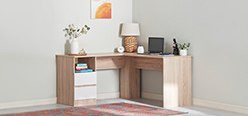
Desks
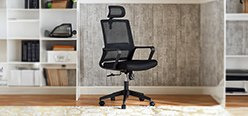
Chairs
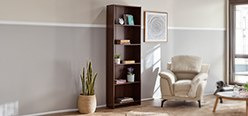
Book Cases
296 Products
Sort by
 Deliver to: Select Your Area


799
999
20% Off


449
549
18% Off


699
879
20% Off


449
529
15% Off


229
299
23% Off


499
629
21% Off


399
499
20% Off

499
599
17% Off

Download our apps
Shop our products and offers on-the-go.