Home Delivery

Free Shipping

Click & Collect
Narrow By
Bunk beds offer a practical, stylish solution for families looking to maximise space in children’s bedrooms or shared rooms. They provide multiple sleeping areas while leaving room for everyday activities and furniture. Available in a wide range of designs and materials, including wooden bunk beds, these pieces suit both modern and classic interiors. With thoughtful construction and versatile layouts, bunk beds from Homebox support growing households with ease and flexibility.
Discover Bunk Beds at Homebox Qatar
When selecting bunk beds for children’s bedrooms, safety and layout are paramount. Bunk beds with storage offer built-in solutions for organising toys, bedding, and everyday essentials, keeping everything neat and in place. Bunk beds with stairs provide secure, comfortable access, especially in rooms shared by multiple siblings. To add a personalised touch to your children’s bedroom, choose fitted sheets in their favourite colours that stay snug on the mattress, even with active sleepers.
Robust frames, protective guardrails, and well-spaced levels support confident daily use. Coordinating bunk beds with other bedroom furniture, such as desks or storage units, helps maintain a balanced, organised room layout suited to children’s routines.
Shop for Bunk Beds & Loft Bunks Online in Doha
Loft bunks free up valuable space beneath the sleeping area for play zones, study corners, or extra storage. Adding bookcases or compact seating adds structure and creates a place where children can play, rest, and read. Choosing a design that adapts to your child’s age ensures long-term usability.
For everyday comfort, choosing the right mattresses is essential for proper support at each level. Adding soft touches, such as bean bags, creates relaxed spots for reading or quiet time. With Homebox’s collection, bunk beds become a space-efficient solution that combines practicality, comfort, and thoughtful design in children’s rooms.
FAQ
Which Bunk Configuration Best Suits My Room?
Let the ceiling height and floor plan decide. A stacked double-decker uses the least floor space but requires the most headroom above the upper mattress. A trundle keeps both youngsters close to the ground and rolls the second bed away each morning. Cabin frames seal the underbelly with doors and shelving; a mid sleeper provides standing height for a desk; and a metal loft bed opens up the entire footprint for play. When the sharing period is up, convertible frames separate into two beds. When furnishing a bedroom from scratch, children's room sets combine the wardrobe and drawers into a single finish.
At What Age Can A Child Move To The Top Bunk?
Consider the manufacturer's minimum age for the upper bunk as a floor, not an objective. Before anyone is guaranteed the upper bunk, keep a close eye on your own child on the ladder, because a steady climb up and down in daylight tells you more than a birthday. Ask whether the same trip would be safe at three in the morning. Children who still wake for a drink or a toilet do better underneath. If the younger of the two isn't ready for height, a cabin bed or mid sleeper gives them their own room without lifting them off the ground.
What Should I Check On The Guardrails And Ladder?
Check three things: how high the rails are above the mattress, how much of the open side they cover, and where the ladder lands. Rails must sit well above the sleeping surface once the mattress is in place, and you should carefully examine the gap left for the ladder. A slanted ladder is better for little feet than a vertical one, and staircases trade floor space for an easier climb. Bunks are available in tilt-in Homebox stores, allowing a youngster to try the climb while judging the rail height at eye level.
Do I Have Enough Ceiling Height for a Bunkbed?
Before you shop, use a tape measure to check the size. Take the floor-to-ceiling measurement, deduct the frame height specified in the product specifications, and then subtract the mattress depth. Whatever is left is the space for your child to sit up in. One bumped head is generally enough to keep a child off the top level permanently. Consider what hangs from the ceiling, since a fan or pendant light over the bed precludes a stack that the naked measurement would allow. Air-conditioning outlets deserve the same treatment.
What Mattress Size Can These Bunk Frames Accommodate?
Single sizes are either 90x190 cm or 90x200 cm, depending on the frame; check the figure in the product title before ordering. That 10 cm is enough to create a gap at the foot of the bed or to prevent a mattress from falling into the base. When a frame sleeps two people, buy both mattresses together, as a matched pair lets you swap bedding between floors. Leave the sheets for last, because a fitted sheet fits the mattress, not the frame it sits on.
How Thick Should the Top Bunk Mattress Be?
The guardrail is thin enough to keep functioning properly. Every centimetre of depth increases the resting surface while decreasing the effective height of the rail alongside it. This is why a deep pocket spring model works for the lower level, and a slimline foam mattress works for the top level. When a frame specifies a maximum mattress depth, treat it as a restriction rather than a suggestion, and include any topper in the total. On the bottom bunk, depth is free to pursue comfort.
Can A Trundle Bunk Bed Accommodate A Third Child?
Yes, where the frame is designed for it, with a 90 x 200 cm sleeper above and a larger 120 x 200 cm trundle below. That combination converts a two-child frame into a three-child one, but it requires two mattress sizes and two sets of bedding instead of one. Measure the room width first, as a 120 cm base needs more floor space than a single, and the pull-out piece must clear the wardrobe doors. Sleepovers are the norm, as the lower bed rolls back beneath in the morning.
Should You Use the Space Under the Top Bunk for Storage or Leave It Open?
Work out what's missing from the bedroom. A cabin frame with doors and shelves takes up space underneath, leaving no room for clothes and toys. A metal loft bed frees up space in the bay, allowing you to add a play zone, a bean bag, or an existing desk as the child grows. Storage built into a bed is fixed once it's assembled, while an open bay stays flexible for years. When hanging space is a serious issue, children's wardrobes free up the underside for better use.
Will a Bunk Bed Come Apart Into Two Separate Beds?
Convertible frames are labelled as such in the product title (Homebox) for easy identification before purchase. Splitting one into two beds requires two wall positions, so measure the room as it will look later, not now. On assembly day, bag the connecting fittings with the instruction sheet and tape them inside the closet, since you'll need them years later if you split the beds. When children want their own floor space, single kids' beds work well in a narrow bedroom, while a set of twin kids' beds works well on a longer wall.
How Much Weight Can the Top Bunk Support?
Follow the manufacturer's published frame limit, included in the product specifications, and trust only that figure. Sleeping lengths here are full single sizes, so a teenager outgrows the styling long before the measurements become a concern. Climbing, sitting on the edge, and the occasional bounce all strain a bunk's joints, so frequent use rather than one heavy sleeper loosens it. Retighten each bolt several weeks after assembly and once a year thereafter. Avoid the strain of two individuals perched on the highest edge.
How Is a Bunk Bed Assembled, and Should It Be Attached to the Wall?
Bunk beds arrive flat-packed, often in multiple cartons, and you assemble them in the room where they will be used. Because a bunk has far more parts than a single frame, you'll need two adults and a clear afternoon. Follow the wall-fixing instructions exactly: if the manufacturer includes an anchor bracket, the frame is designed to use it. Before ordering, check the lift, doorway, and any staircase turns, as the route in depends on the longest carton. Book delivery and assembly together at Homebox, preferably in the morning when the bedroom is clear.
Which Bedding Fits the Top Bunk?
Keep it light and fitting. A deep-pocket fitted sheet can withstand the tug needed to reach the far corners, whereas a lighter quilt shakes out more easily when headroom is limited. Avoid heavy covers and big throws, as anything hanging low from the top level will end up on the floor by morning. Make the bed from the ladder rather than the room, and test the corners with a sheet before the mattress is delivered. Darker colours absorb a spill better than white.
Show More
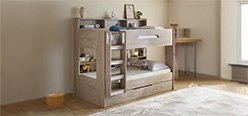
Single
8 Products
Sort by
 Deliver to: Select Your Area


8 products out of 8
Download our apps
Shop our products and offers on-the-go.